artistry • Clean structure • Intentional detail.
✨ Where theory meets the art of ink.
The Ending
I Couldn't Write:
Read Below
A poetic reinterpretation of Eli Goldsworthy's "Love Roulette"
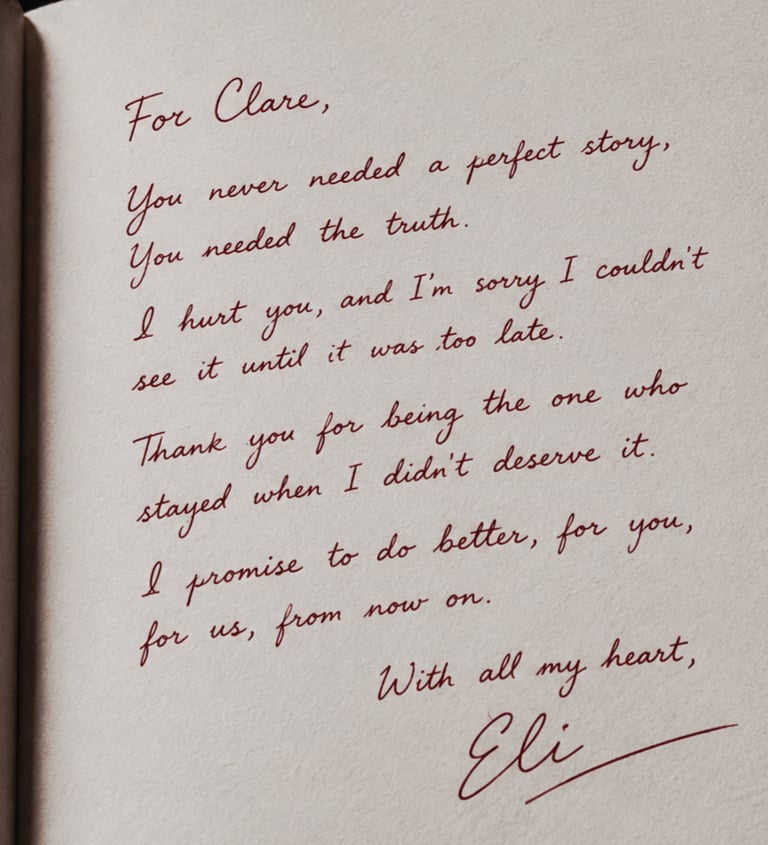
My Poem + Artwork dedication
The original script / quote:
From Script to Symbol: Reimagining a Character Through Poetry & Design
(By Munro Chambers, “Eli Goldsworthy”):
No matter how much all of you want a happy ending, YOU CAN'T HAVE I tried to write one, but it's impossible. I re-wrote and re-wrote but things kept changing. And I hurt people and I... and I knew they were hurting. (Half-Laughs): But I didn't stop. Because your mind tricks you. It tricks you into thinking that things are fine. They're not fine. Nothing's fine! IT'S ALL WRONG!!! [Looks at Clare]: I'm all wrong. That's it. There's no happy ending. [Sighs; Burns 'Love Roulette' Script] Eli and Clare: (Crying).
About my Poem:
What if a story wasn't meant to be rewritten—but understood?
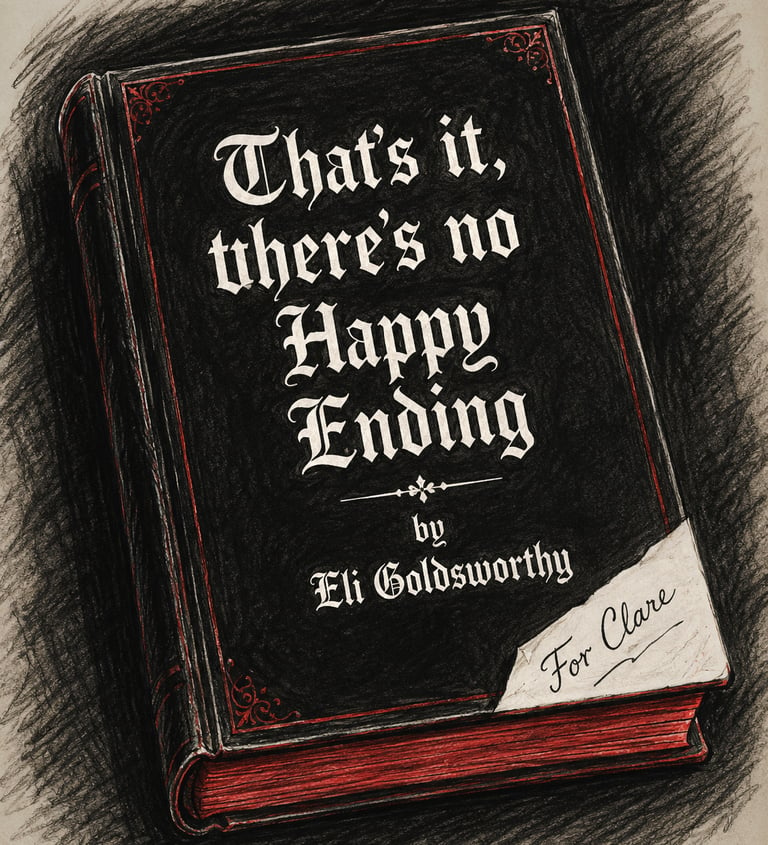
This project reimagines Eli Goldsworthy's emotional monologue from Love Roulette as an original poetic speech, accompanied by symbolic concept art that transforms the script into a physical book dedicated to Clare. Through literary imagery, visual symbolism, and narrative design, the work explores themes of guilt, accountability, love, and the acceptance that not every story ends the way we hope.
Together, the poem and accompanying sketches invite viewers to reflect on the fragile nature of relationships and the idea that true growth begins not by rewriting the past, but by facing it with honesty.
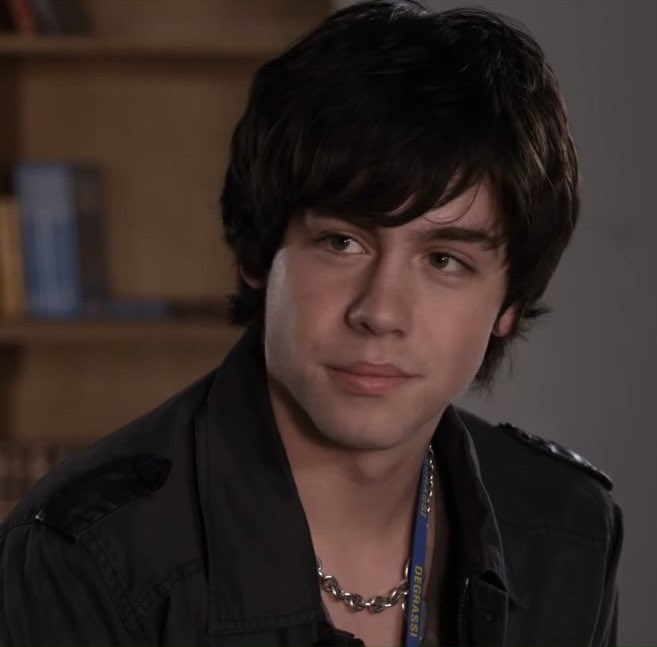
Meet Eli Goldsworthy
Video Context of his Character.
A accurate performance of Bipolar Disorder.

“That’s it, There’s no Happy Ending” (Rewritten, By Ana Iribar):
I know you all have been waiting. Everyone is anticipating the last scene. The music expected to be heard at its finest hour, for the lighting to rise and soften. The point at which each shattered fragment finds its way back home. You're waiting for the person who inflicted the suffering to abruptly turn into the one who relieves it.
But that isn’t real.
I tried to rewrite, again and again and again. I clung to my pen as if it could save my existence. I tweaked and revised the words to erase the mistakes. Every instance where I could have done better, I thought if I changed the story, the damage would vanish into flames. But, people aren't scripts you revise. People aren’t fictional characters awaiting an entirely novel resolution.
When you wound people, the pain doesn't stop. There is no reset.
I'm haunted by that.
I convinced myself that the sky was still blue as the storm approached. I used my justifications to create a shelter that I named protection. I convinced myself that I was rescuing everyone, when perhaps all I was doing was protecting myself from reality.
The truth is… I am the fire.
I hurt people and I convinced myself nothing had shattered,
(Looks at Clare)
I wanted to give you a perfect story. A love untouched by mistakes. A world where I could protect you from everything. But you never needed perfection. You needed the truth. And I should have given you that from the beginning.
(Looks at the script)
This was never a story I could rewrite. It was just two people trying to hold something fragile with hands that were still learning how to heal.
(Burns the script)
Stories are not saved by rewriting them.
Maybe all we get is one last chance to become better before the story ends.
Why this reflection works dramatically:
The script becomes a metaphor for control:
Eli is not just writing a play. He is trying to rewrite reality.
The fire imagery mirrors his guilt:
He realizes he was not just witnessing destruction; he contributed to it.
The broken imagery represents relationships:
Once someone is hurt, you cannot simply reset them.
The ending shifts from hopelessness to responsibility:
Eli still accepts that there may not be a “perfect ending,” but he discovers that growth can happen before the story ends.
Why this version is stronger:
It keeps Eli’s guilt and emotional collapse, but removes repetition that could slow the performance.
The imagery is concentrated around three main metaphors:
The script/pages - Eli’s obsession with controlling life.
The storm - denial and the consequences he ignored.
The fire - accepting that he caused harm, not just witnessed it.
The ending is more hopeful without becoming unrealistic. Eli does not magically fix everything, he simply realizes that honesty and change matter more than a perfect ending.
Thank you for reading.
© 2024 - 2026. All rights reserved.
Contact:
anairibarinfo@gmail.com
Text to inquire: (813) 330-0340